
The Energy Consortium is a recognized Institute of Eminence Center at IIT Madras. It is an umbrella initiative that spans the whole spectrum of research in energy generation, storage, conversion, and distribution. We are an industry-academia-government collaborative effort established with the aim of accelerating the development of technologies that shall enable the energy transition towards a low-carbon future. More details regarding our initiatives and activities are available at https://energyconsortium.org/
About: The Energy Consortium is a recognized Institute of Eminence Center at IIT Madras. It is an umbrella initiative that spans the whole spectrum of research in energy generation, storage, conversion, and distribution. We are an industry-academia-government collaborative effort established with the aim of accelerating the development of technologies that shall enable Accelerating Net Zero. We firmly believe that technology solutions when deployed at scale in India will become technology solutions for the world. Our expertise emanates from affiliated faculty and includes carbon capture and storage, gas hydrates, renewable energy systems, distributed power, microgrids, electrolyzer technologies, and energy storage and conversion technologies.
Industry Advisory Board: We have eleven industries participating as our founding & core members. They are global energy majors focused on various sectors including O&G, power & utility, construction, transportation & digital enterprises and representing North America, Europe, Asia Middle East regions. The current members are Shell, Baker Hughes, Aditya Birla, Infosys, Chevron, Chennai Petroleum Corporation Ltd, Technip Energies, NLC India Pvt Ltd, Saudi Aramco Caterpillar and bp. The Industry Advisory Board (IAB), with voting representation from all our founding and core members, oversees the overarching research direction of the consortium and directs funding as well as provides advisory inputs on the programs.
Activities: We currently have more than 50 funded research projects that are ongoing with industry partners. In addition, we have conducted various consultancy projects and have collaborations with global strategic partners that includes Australia via its Department of Foreign Affairs and Trade, Denmark and broadly the Nordics via the Denmark Energy Agency and the Embassy of India in Copenhagen, UKs Energy Systems Catapult and our own campus at IIT Madras Zanzibar that gives us a vantage point for East Africa. The Energy Consortium provides its expertise in an advisory capacity with the Bureau of Energy Efficiency, Department of Science & Technology, Guidance Tamil Nadu, NITI Aayog. We are also officially observers at the UNFCCC on behalf of IIT Madras.
More details regarding our initiatives and activities are available at https://energyconsortium.org/
TRENDSETTER Program
As per the charter of the consortium, a majority portion of the industry membership funding is intended for exploratory and collaborative research that enables the Energy Consortium to become one of the key technology hubs. The TREND SETTER1 program aims to identify a few areas aligned with the long-range research initiatives of the industry and build capability within the consortium.
The Energy Consortium invites a team of faculty members to submit a crisp proposal aimed towards Exploratory R&D and Fundamental research that enables breakthrough innovation*2. It is anticipated the work done through this grant will enable the faculty teams to develop follow-on larger proposals for external funding. Industry and institutional partners can be identified and enabled by the consortium. The Energy Consortium is working closely with industry partners and will provide the requisite network and solicit expression of interest for developing large proposals such as are solicited by DST, DBT, MNRE, ANRF and EU Horizon calls, to name a few.
2026 – Call for Proposals:
Following are the broader themes and proposed conceptual pathways identified for 2026. The detailed concept note for each theme and the corresponding challenge statements and directions from industry are captured in an annexure file/attachment.
| Theme Type | Theme Name | Conceptual Pathway |
|---|---|---|
| Theme 1 | Biomass & Plastics: Valorization & derivative chemicals | Integrated Plastic–Biomass Refineries for Circular Carbon Utilization |
| Theme 2a | Grid Augmentation - BESS | A comprehensive, multidisciplinary investigation into next-generation storage technologies that can provide cost-effective, scalable, and long-duration energy storage while addressing the spatial and economic constraints inherent in today’s battery-based systems. |
| Theme 2b | Grid Augmentation - Energy solutions for data centers. | RTC RE strategy and design driven optimization improvements |
| Theme 3a |
Sustainable energy & resources - resources 1. Efficient and effective use of energy & resources 2. Recovery of metals, materials and minerals 3. Life cycle assessments 4. Economic, social and environmental concerns |
Digital tagging, second use deployment and LCA |
| Theme 3b |
Sustainable energy & resources - energy
1. Efficient and effective use of energy & resources 2. Life cycle assessments 3. Economic, social and environmental concerns |
IIT-Madras uses its unique position to integrate it’s hydrogen program with downstream ammonia program. |
| Theme 4 | Digitalization & AI | Connecting sustainability goals and actual emission reduction outcomes |
| Theme 5 | Others - Not covered by any specific theme | Driving Down the Costs of Direct Air Capture |
Process and timelines:
| TRENDSETTER 2026 program initiated in IAB Meeting | 19 Feb 2026 |
| Problem Statements from Industry | 23 Mar 2026 |
| Call for proposals announced | 3 Apr 2026 |
| Full Proposal Submission | 14 May 2026 |
| Reviews by Industry completed | 1 June 2026 |
| Final down-selection: Presentations by PIs | 15 June 2026 |
| Announcement of Funded Programs | 26 June 2026 |
| Projects Begin | 1 Aug 2026 |
*All timelines consider midnight as the deadline time.
As per the charter of the consortium, a fair portion of the industry membership funding is intended for exploratory and collaborative research that enables the Energy Consortium to become one of the key technology hubs. The TREND setter[1] program aims to identify a few areas aligned with the long-range research initiatives of the industry and build capability within the consortium.
The Energy Consortium invited a team of faculty members to submit a crisp proposal aimed towards Exploratory R&D and Fundamental research that enables breakthrough innovation*[2]. It is anticipated the work done through this grant will enable the faculty teams to develop follow-on larger proposals for external funding. Industry and institutional partners can be identified and enabled by the consortium.
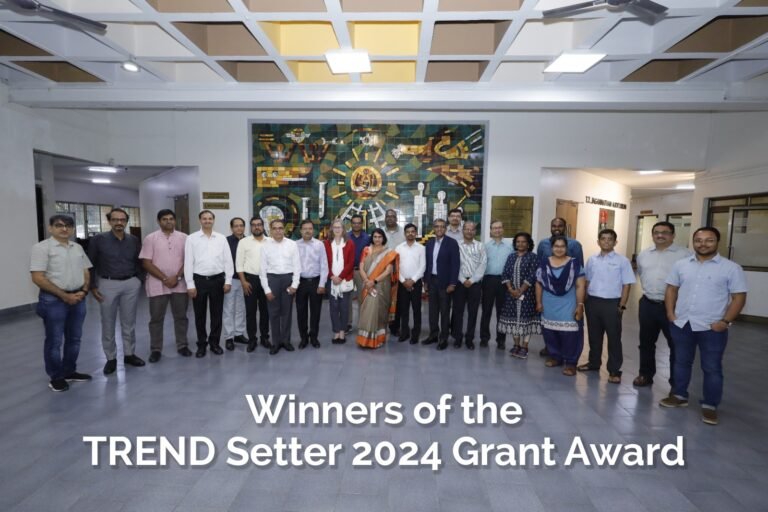
On Industry Day 28 June 2024, the Industry Advisory Board awarded three proposals in a high-risk high reward track and five in an early career track. These were in areas such as Improving energy utilization, Materials for energy transition, Synthetic biology or bio-mining for energy solutions and Niche applications supporting sustainable living. This is an unprecedented effort of coordinated activities in energy grand challenge areas in India.
[1] Technology Research ENgineering and Development (TREND) setter program
[2] If multiple projects are received under the same topic that are close in intended outcomes, the PIs could consider merging the project with a larger outcome and budget
Award Grants 2024
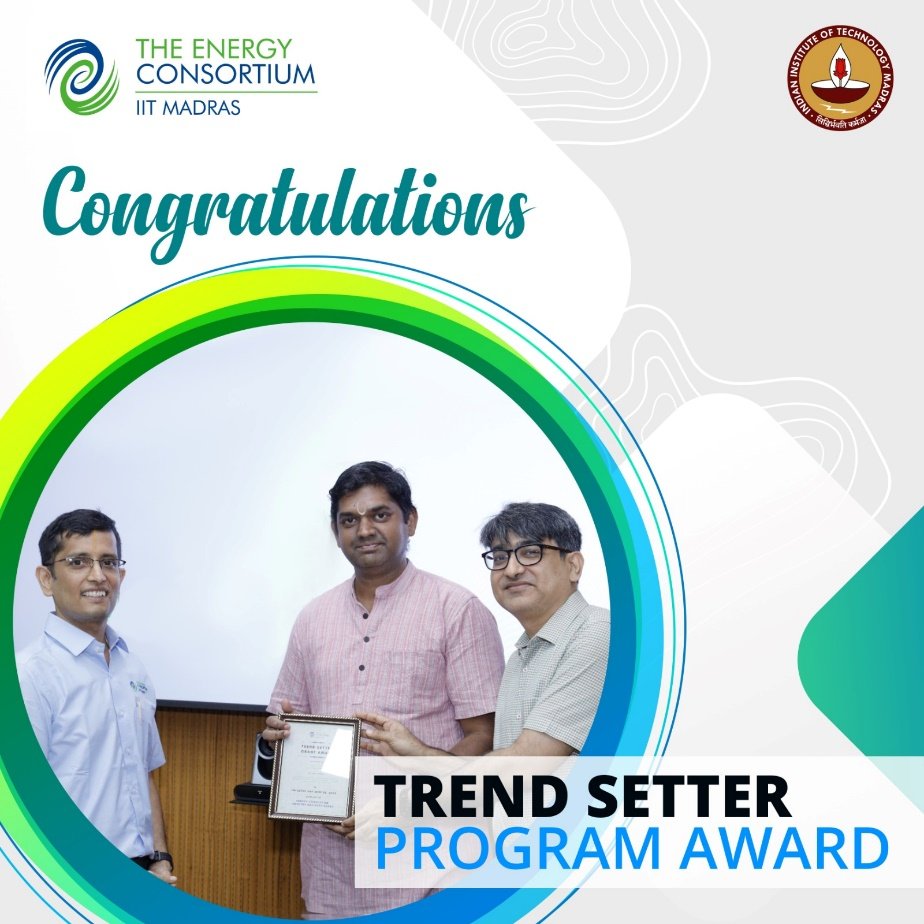
Prof. R Vinu and Prof Rajnish Kumar
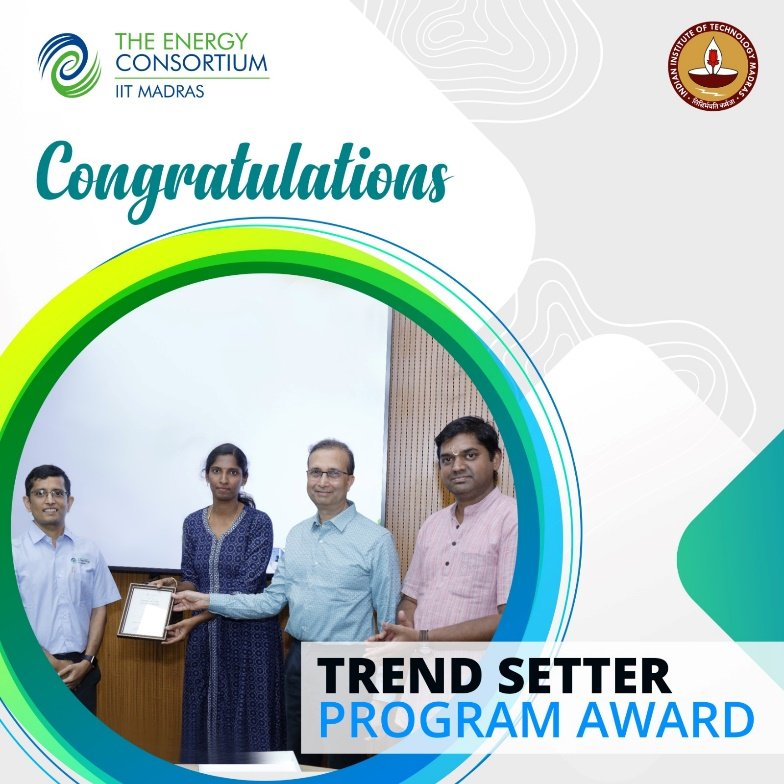
Prof Guhan Jayaraman, Prof Krithika Ravi and Prof R. Vinu
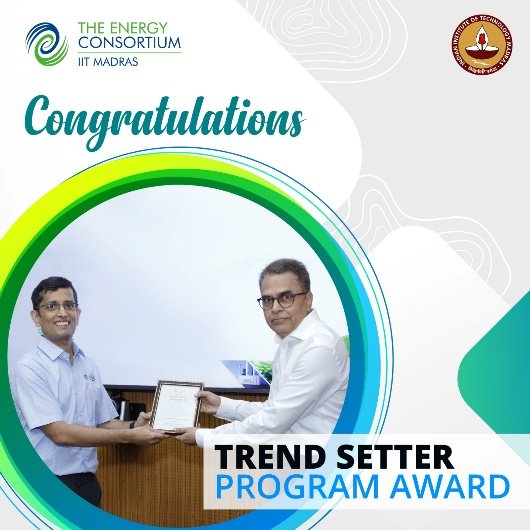
Prof. M S Srinivasan
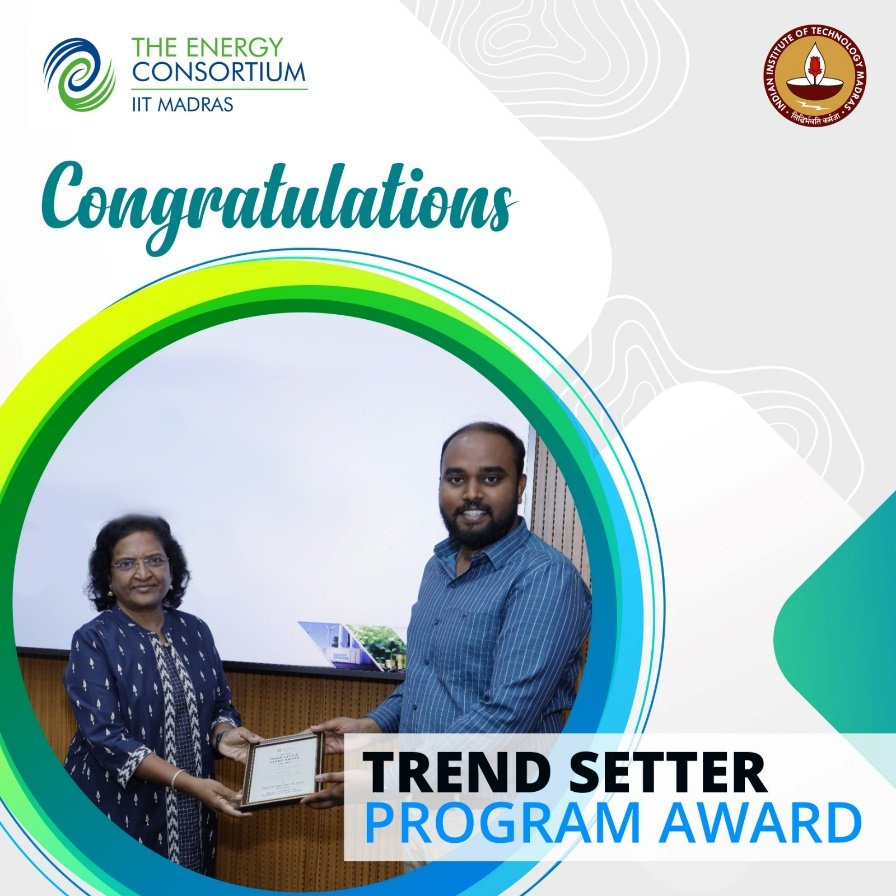
Prof. Mohanakrishnan Logan and Dr. M. Lavanya, CPCL
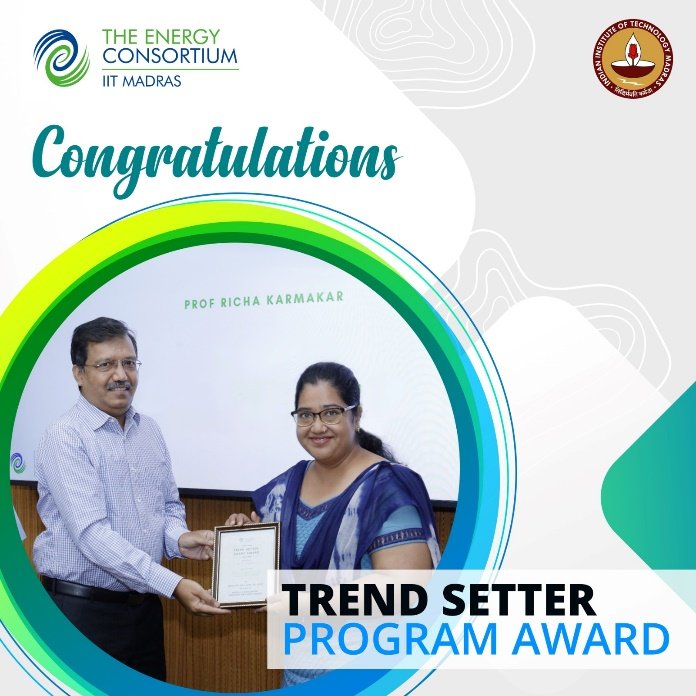
Prof Richa Karmakar and Ramasubramanian A, Technip Energies
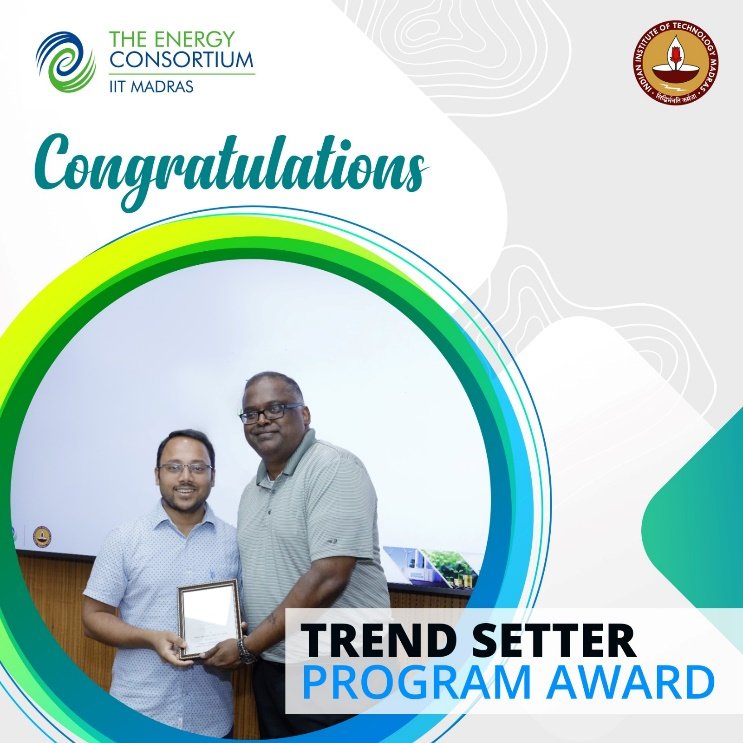
Prof Himanshu Goyal and Dr. Hariprasad J. Subramani, Chevron
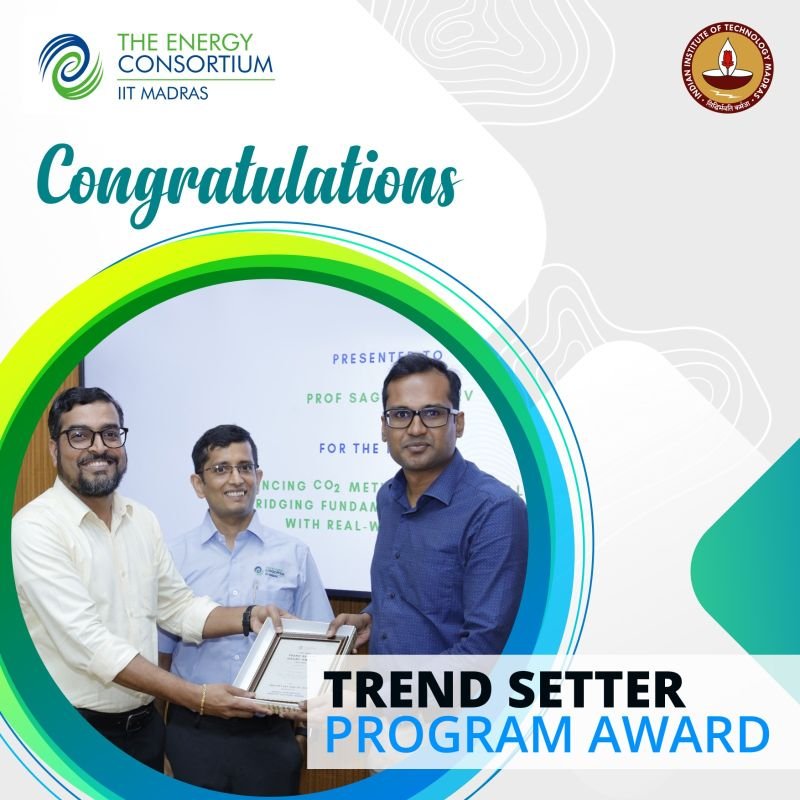
Prof Sagar Sourav and Rahul Wagh, Baker Hughes
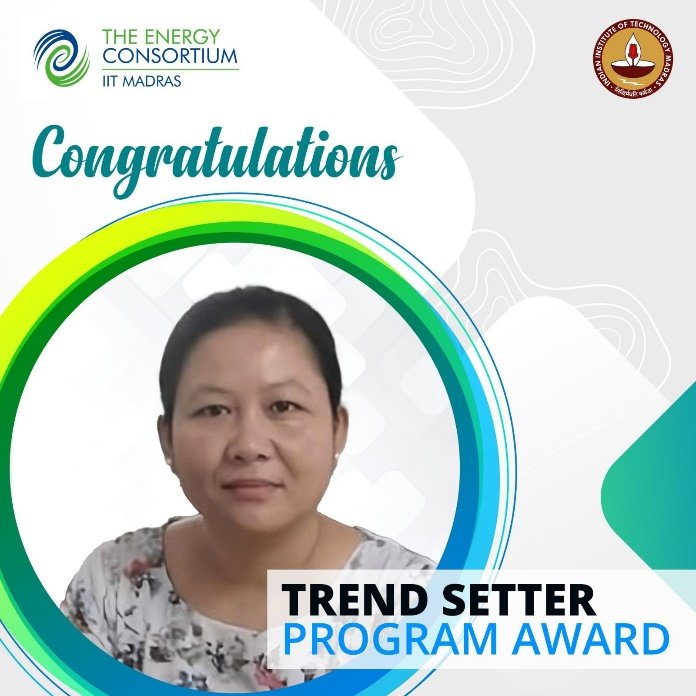
Prof Swapna Singha Rabha
Guidelines for applicants:
- Early & Mid-Career Track (Track 2):
- Open to all early career faculty members (Asst Prof and Asso Prof, up to 15 Years at the institute/university)
- 8-12 projects will be awarded, each funded at 10-15 Lakhs, under this track.
- Award can be considered as ‘seed grant’ to work on novel approaches and breakthrough research ideas within the proposed areas of interest
- Objective is for the PIs to develop deeper collaboration with founding members of the consortium
- Emphasis is on providing funding for human resources and consumables, while leveraging existing facilities and projects within the institute/university
- Expected TRL after project completion is 3
- High Risk High Reward Track (Track 1):
- Collective submission is encouraged, and grant awarded can be more than Rs 50 lakh and up to Rs 1 crore
- 1 or 2 projects will be selected under this Track from the proposals received
- Principal Investigators need to form a cross-disciplinary team (involving multiple departments or institutions/universities) and propose deliverables that bring meaningful contributions from all to the outcome of the project
- Three or more founding members to endorse the proposed outcomes and the intended benefits, with optional co-funding. PIs are encouraged to work with Industry Advisory Board members in developing strong proposals
- Project duration to be limited to a minimum of 12 and maximum of 18 months
- Starting technology readiness level (TRL) should be at least at 3 and end of project TRL should have advanced to 4 and preferably 5
- A number of Track 1 projects are already funded by Energy Consortium in the past four years and some of them have progressed to TRL 5 or 6. We would work with PIs and industry partners in preparing compelling proposals that can solicit higher funding from DST, ANRF or EU Horizon call.
- General note on funding awarded: The funding is not recommended for equipment and/or any other capital expenditures. Such spends will have to be pre-approved and will be allowable in very rare instances. Operational expenses and any add-on for enhancements can be considered on a case-to-case basis
Assessment panel:
- IITM Panel: Experts identified by The Energy Consortium
- Industry Advisory Board members
Please note: The individual comments collected from Industry Advisory Board members of the Energy Consortium will be considered for final evaluation. Decisions from the IITM Panel are final.
Assessment criteria
Stage 1: Offline review of full proposals (word document format)
- All proposals will be assessed by the industry founding members individually via their appointed Industry Advisory Board members on five criteria as below
- Alignment: Alignment of the proposed research work with the company’s long-range research and technology goals.
- Impact: the proposed project proposal’s potential to generate significant impact in moving the needle while accomplishing global ‘net-zero’ goals
- Approach: Is the proposed methodology/scientific approach appropriate and does it have the potential to become a gamechanger
- Team: Are the PI’s equipped with the right background, expertise and available lab facilities/resources to deliver the promised milestones
- Budget: Are the requested budgets and the timelines proposed realistic
- All five criteria will receive a ranking on the scale of 1 (least qualified) to 5 (most qualified). In addition to this numeric ranking, review comments will be collected on all criteria as well overall for the proposal, from all the reviewers.
- All proposals will be assessed by the Energy Consortium’s appointee(s) from IIT Madras on the same five criteria.
- All assessments will be collectively finalized in consultation with the Industry Advisory Board to select the strongest proposals from amongst all those received.
Stage 2: Online review of full proposals (presentation to committee)
- Proposals downselected from Stage 1 reviews will be invited for Stage 2 review.
- PIs of proposals will be informed and invited to participate in a 20-35 min long review. The proposal reviewers will constitute the industry representatives of the founding and core members of The Energy Consortium
- Intent of Stage 2 review is to conduct finer assessment of proposals in a discussion format and to evolve stronger scope and/or assign specific technical responsibility to the industry members, if mutually deemed appropriate and agreed by both the industry member and the proposing PI(s).
Guidance on what would be successful proposals
Successful proposals would be those that possess high potential in terms of generating long term solutions to energy transition problems, and as adjudged in the near term based on possibility of developing intellectual property as well as attracting additional funding. The funding can ideally be from within the industry founding members of the Energy Consortium or by extension from an industry partner or any relevant stakeholder that is willing to fund work further for maturing the TRLs (and CRLs). Energy Consortium is a willing partner in this endeavour and runs other flagship programs, other than TREND Setter to enable this.
Eligible applicants would be those who
- possess proven track record and expertise in the field of their application to the program
- are able to meet all the necessary guidelines as outlined above for the program
- are able to provide all information in their proposal that satisfies all the assessment criteria of the program
- are able to respond within the stipulated timeframes of the program
All decisions by the Energy Consortium Industry Advisory Board will be deemed final.
Announcement of award:
- Grant awardee’s will be informed around second half of June, by intimation to lead PI, of the final decision from the assessment panel including review committee comments.
- Formal public announcement of the TREND setter grants will be at the Energy Consortium’s Industry Convening planned on 26 Jun and to be held at the Hall 2, Ground floor, IC&SR Building, IIT Madras campus
Contact Information
- For further queries and information needed as well as if you wish to connect with industry partners, either for refining and/or developing stronger proposals, please write to Nikhil S Tambe <nikhil.tambe@iitm.ac.in> with your requests.
- For submitting proposals please complete and send the fully filled word files (in accordance with the template format provided) to project officer, Anita Clayton <ceooffice@icsrpis.iitm.ac.in> by or before the deadline.
Reference:
- TREND Setter 2023: https://energyconsortium.org/projects/trend-setter-program/
- TREND Setter 2024: https://energyconsortium.org/projects/trend-setter-2024/
- Full Proposal Format: IITMEnergyConsortium_TRENDSETTER2025_ProposalCall.docx
- Tabular description: TRL, CRL and ARL
| Level TRL | Technology Readiness CRL | Commercial Readiness ARL | Adoption Readiness |
|---|---|---|---|
| 1 | Basic principles observed | Market opportunity identified | Problem identified, but no adoption driver yet |
| 2 | Technology concept formulated | Commercial concept formulated | Stakeholder interest is theoretical |
| 3 | Proof of concept validated in lab | Business case under development | Early awareness among adopters |
| 4 | Lab validation of components | Market testing of concept | |
| 5 | Validation in relevant environment | Commercial model explored with partners | Feedback from early users / demo partners |
| 6 | Prototype demonstrated in relevant conditions | Market interest confirmed; pilot customers identified | Stakeholder engagement begins from potential adopters |
| 7 | Prototype demonstrated in operational environment | Path to market and scale-up strategy defined | Clear case for adoption with defined benefits |
| 8 | Final system tested and qualified | Product ready for launch and market delivery | Institutional/process readiness for integration |
| 9 | Technology deployed commercially | Commercial viability proven; scaling underway | Widely accepted and integrated in the user ecosystem |
Equipment spends to be minimal and allowed only for Track 1. Operational expenses and any add-on for enhancements can be considered on a case-to-case basis
Assessment panel:
- IITM Panel: Faculty-in-charge for Energy Consortium and experts identified
- Industry Advisory Board members (total of ten)
Please note: The individual comments from representatives from founding members will be considered for final evaluation. Decisions from the IITM Panel are final.
Assessment criteria:
- All proposals will be assessed by the industry founding members individually via their appointed Industry Advisory Board members on four criteria as below
- Alignment: Alignment of the proposed research work with your company’s long-range research and technology goals.
- Impact: the proposed project proposal’s potential to generate significant impact in moving the needle while accomplishing global ‘net-zero’ goals
- Approach: Is the proposed methodology/scientific approach appropriate and does it have the potential to become a gamechanger
- Budget: Are the requested budgets and the timelines proposed realistic
- All proposals will be assessed by the Energy Consortium’s appointee(s) from IIT Madras on the same four criteria.
- All assessments will be collectively finalized in consultation with the Industry Advisory Board to select the strongest proposals from amongst all those received.
- are permanent residents of India
- belong to NIRF ranked institutions/universities
- possess proven track record and expertise in the field of their application to the program
- are able to meet all the necessary guidelines as demanded by the program.
- are able to provide all information in their proposal that satisfies all the assessment criteria of the program.
- are able to respond within the stipulated timeframes of the program.
Guidance on what would be successful proposals
Successful proposals would be those that possess high potential in terms of generating long term solutions to energy transition problems, and as adjudged in the near term based on possibility of developing intellectual property as well as attracting additional funding. The funding can ideally from within the industry founding members of the Energy Consortium or by extension from an industry partner or any relevant stakeholder that is willing to fund work further for maturing the TRLs (and CRLs). Energy Consortium is a willing partner in this endeavour and runs other flagship programs, other than TREND Setter to enable this.
Announcement of award:
- Grant awardee’s will be informed around mid-June by intimation to lead PI of the final decision from the assessment panel including review committee comments.
- Formal public announcement of the TRENDsetter grants will be at the Energy Consortium’s Industry Day planned on 27-28 Jun and to be held at the Ground floor, IC&SR Building, IIT Madras campus.
Contact Information
In case of any questions please write to Deepa Maria Alexander